









 Loading...
GAME INFO
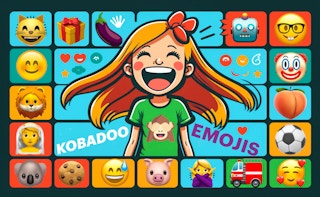
Kobadoo Emojis is a memory puzzle where you study a sequence of emojis and then select the same symbols in the correct order. Each successful round introduces a more demanding sequence, testing how accurately you can hold and recall visual information. The game uses simple mouse or touchscreen controls, making it easy to begin through ABCya3. The main challenge is staying focused as the number of emojis increases. Unlike card-matching games, Kobadoo Emojis does not ask you to find identical pairs hidden on a board. You must remember the exact order in which several emojis appear and reproduce that sequence after the preview ends.
Quick Answer
Kobadoo Emojis is a single-player working-memory game. Watch the displayed emojis carefully, remember their order, and click or tap them in the same sequence when prompted. Correct answers move you forward, while later rounds become harder by placing more information in your memory at once.Kobadoo Emojis Game Overview
Kobadoo Emojis turns a basic sequence-recall exercise into a colorful browser game. A group of familiar emoji symbols appears in a specific order, and the player must remember that arrangement before choosing the symbols correctly. The game belongs to the memory, brain-training, kids, and casual puzzle genres. On ABCya3, it fits naturally alongside educational and concentration-based titles in the Other collection. Rounds are designed to be short, but the challenge grows as the sequences become more complex. This makes the game suitable for a quick focus exercise or a longer session built around improving your recall.Quick Facts
| Detail | Information |
|---|---|
| Game | Kobadoo Emojis |
| Genre | Memory, brain-training, kids, and casual puzzle |
| Developer | Eneagrama |
| Publisher | Not publicly confirmed |
| Release Date | February 1, 2022, based on the browser release listing |
| Platform | Web browser on compatible desktop, mobile, and tablet devices |
| Controls | Mouse click or touchscreen tap |
| Difficulty | Easy to understand with progressively harder sequences |
| Modes | Single-player |
What Is Kobadoo Emojis?
Kobadoo Emojis is a visual sequence game focused on working memory. Working memory is the temporary mental space used when you hold information in mind while completing a task, such as remembering a short code or following several instructions in order. At the beginning of a round, the game presents a sequence of emoji symbols. Your task is to observe which emojis appear and remember their exact positions in the sequence. After the preview, you must select the emojis in the same order. A correct sequence allows you to continue, while an incorrect choice can end the attempt or require the round to be repeated, depending on the current build. The game becomes more difficult as you progress because longer or more varied sequences place greater demands on your attention. It remains mechanically simple, but guessing becomes less reliable once several symbols must be remembered.Key Features
- Emoji-based visual memory challenges
- Sequences that become more demanding as you progress
- Simple click and tap controls
- Short rounds suitable for quick play sessions
- Portrait-oriented presentation on supported devices
- Single-player gameplay focused on concentration
- Browser support for compatible desktop and mobile devices
Kobadoo Emojis Controls
Desktop Controls
- Mouse: Move the pointer over an emoji or interface button.
- Left Mouse Button: Select an emoji in the order you remember it.
Mobile and Tablet Controls
- Tap: Select an emoji or activate an on-screen button.
- Touchscreen: Complete the full game without keyboard controls when the browser build supports the device.
How to Play Kobadoo Emojis
- Start the game and prepare to watch the emoji display.
- Focus on the first emoji and mentally assign it position one.
- Continue observing until the complete sequence has been shown.
- Keep the order in mind when the preview disappears or the selection stage begins.
- Click or tap the emojis in exactly the same order.
- Complete the full sequence without choosing an incorrect symbol.
- Advance to the next challenge and prepare for a longer or more difficult sequence.
- Repeat the process while trying to improve your consistency.
Difficulty and Progression
The first rounds introduce the central rule with a manageable amount of information. They give players time to understand when the preview begins, when it ends, and how the response interface works. Later rounds become harder by increasing the amount of visual information you must retain. Similar-looking symbols may also be easier to confuse, especially when several faces, objects, or expressions appear close together. The challenge has similarities to Three Cups Game, where success also depends on maintaining attention while visual information changes. Kobadoo Emojis focuses on ordered sequences rather than tracking the movement of one hidden object. A fixed total number of levels is not consistently documented for every browser version. Progression details should therefore be taken from the level or round indicator displayed inside the active game build.Kobadoo Emojis Tips and Strategies
- Name each emoji silently. Turning a picture into a simple word such as “cat,” “heart,” or “pizza” can make the sequence easier to retain.
- Group longer sequences. Instead of remembering six separate symbols, divide them mentally into two groups of three.
- Repeat the order in your head. Rehearse the sequence once or twice while waiting for the selection stage.
- Notice distinctive features. Focus on color, expression, shape, or object type when two emojis look similar.
- Keep a steady rhythm. Remembering the sequence with a simple beat can help preserve the correct order.
- Avoid tapping immediately. Recall the entire sequence before selecting the first symbol when the round allows it.
- Remove distractions. Notifications, background videos, and nearby movement can interrupt the brief period when the sequence is shown.
- Use mistakes as feedback. Notice whether you forgot a symbol, reversed two positions, or confused similar images before starting again.